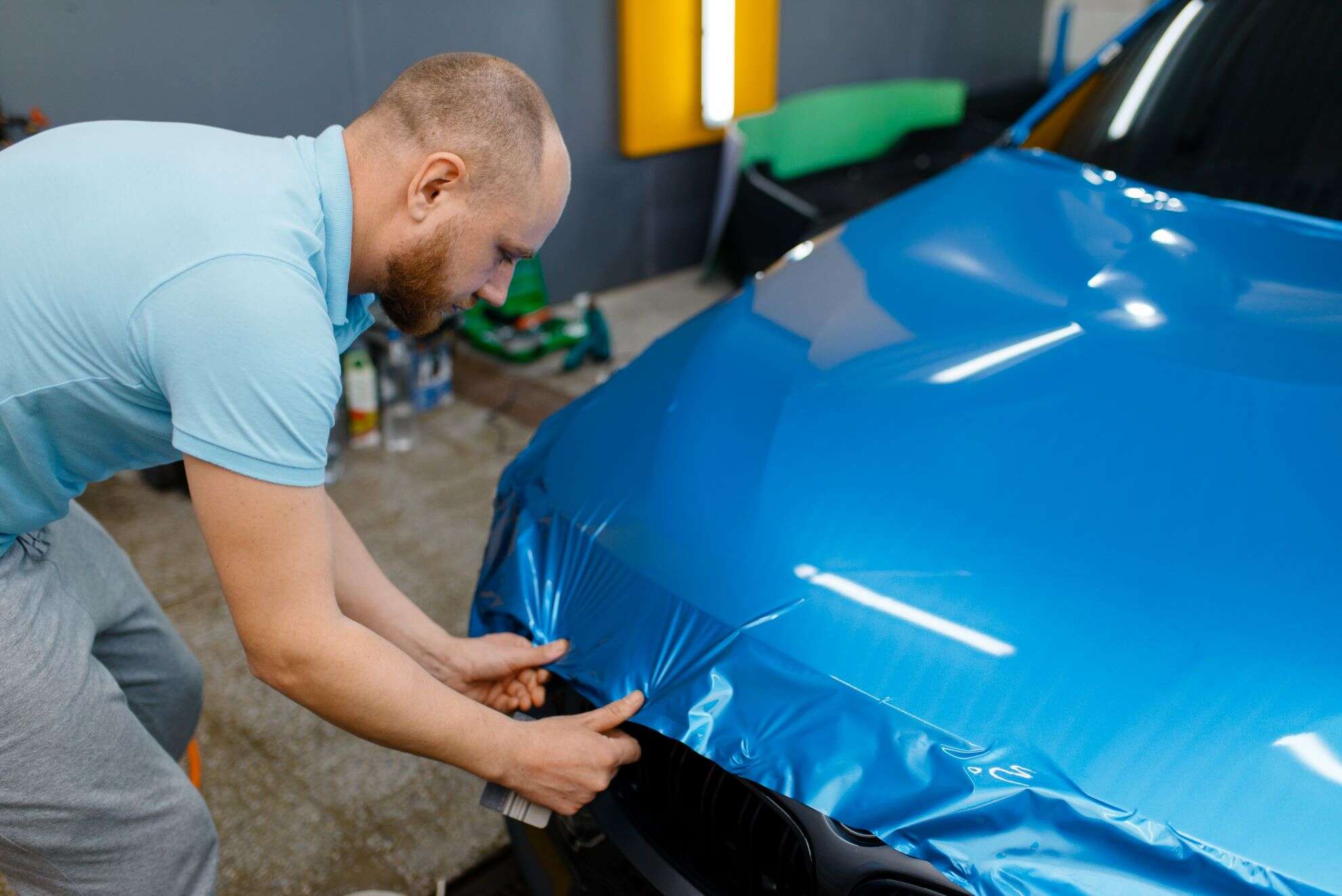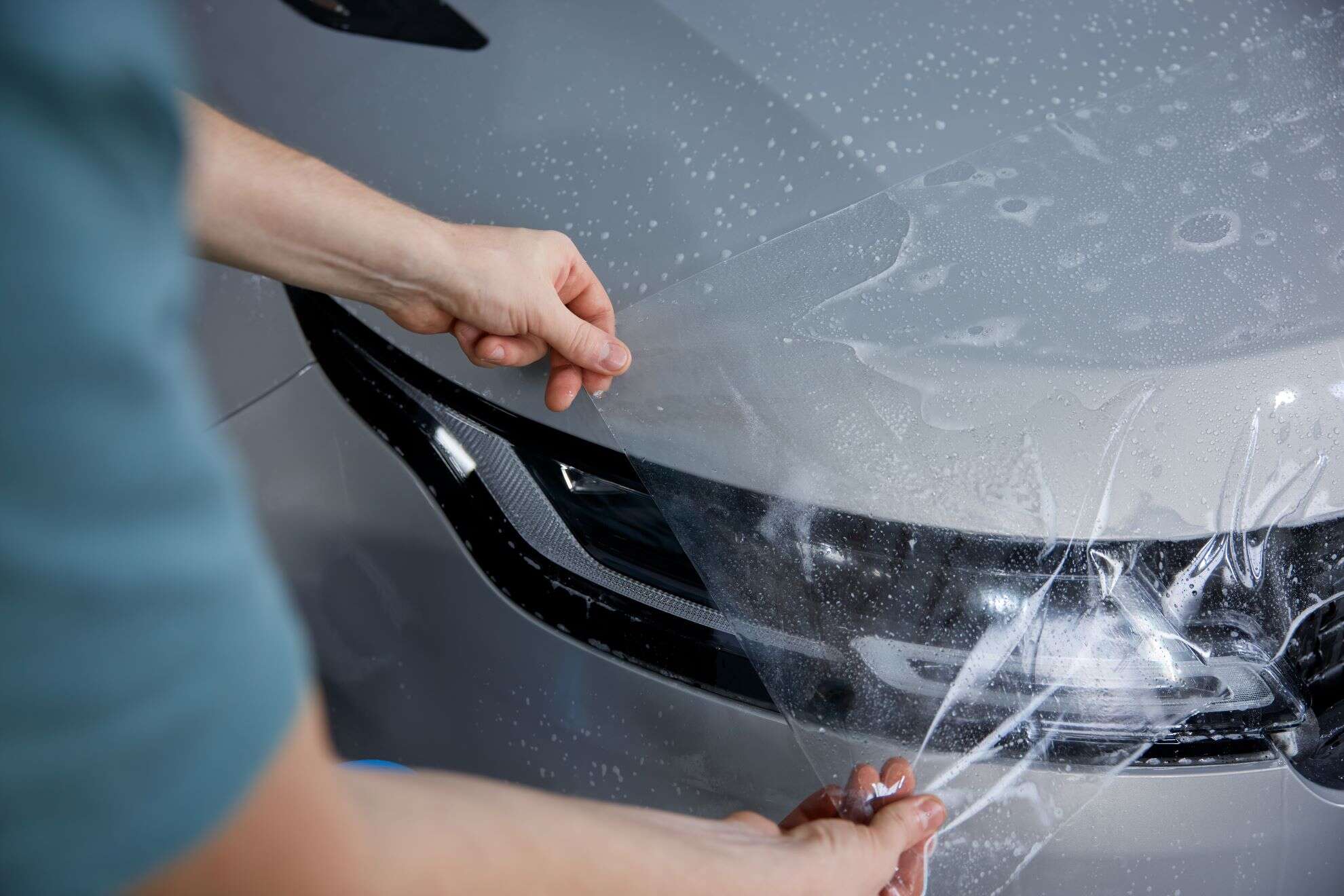





On ppf vs ceramic coating, the honest answer is that they do not compete. Paint protection film is a physical layer, roughly 150 to 200 microns of urethane, thick enough to absorb a stone chip before it reaches the paint. A ceramic coating is a chemical layer measured in single microns: it cannot stop an impact, but it makes the surface slick, easier to wash and better at holding gloss. If a chip is what you are afraid of, you need film. If water spots and a dull finish are what bother you, you need coating. On a car you intend to keep, you want both, in that order.
PPF vs ceramic coating: what does each one actually stop?
Film stops mechanical damage. Gravel off a truck, grit on a motorway, a trolley at a supermarket, light scuffing from a car cover. The urethane deforms and recovers instead of transmitting the hit, and most premium films close fine scratches when warmed by the sun.
What film does not do is make the car easier to clean. It has its own surface, and a neglected film finish looks as tired as neglected paint. That is exactly the gap a coating fills, which is why plenty of detailers coat the film after we install it.
What does a ceramic coating actually change?
Chemistry and adhesion. A cured coating is hydrophobic, so water beads and leaves, which means fewer water spots, less bonded road grime and a wash that takes half as long. It gives a measurable gloss lift on dark paint and some resistance to bird droppings and sap if they are removed reasonably promptly.
It does not resist impact. A coating does not add meaningful thickness, so a stone that would have chipped the paint still chips the paint. Marketing that implies otherwise is overselling a good product.
What does each one cost and how long does it last?
As orientation ranges in the United States, not a price list. A front end in clear film sits around 1,800 to 3,000 USD; full body clear film runs roughly 6,000 to 9,000 USD and higher on complex bodywork. A professional ceramic coating typically sits in the hundreds to low thousands depending on paint correction beforehand, and the correction is usually the larger part of that bill. Our panel by panel breakdown is in what paint protection film costs.
On lifespan, film is measured in years and is sold with long manufacturer warranties; coatings are measured in months to a few years and need maintenance washing to perform as sold. 2wrap.com installs film, and we carry one year of full warranty on installation and on color alongside the manufacturer warranty. Coating is a detailing service, and we are straight with clients about where our work stops.
Which should go on a new car first?
Film first, on the panels that take the hits: bumper, hood, fenders, mirrors and the rocker area. Then coating over the top if you want the easy washing, because a coating applied under film is wasted and applied over film works exactly as it does on paint.
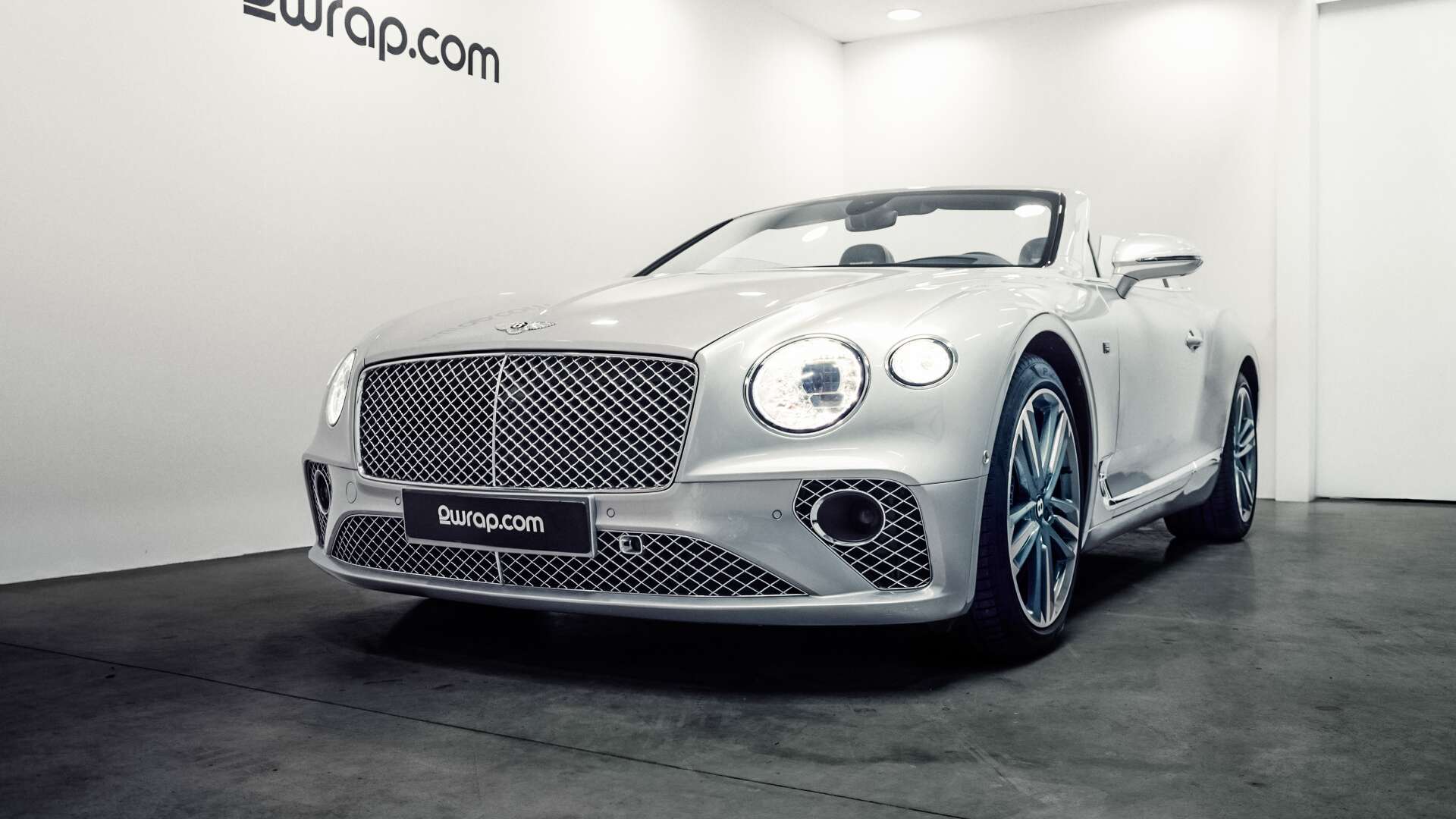
The one case where we push harder on film is a car that will be kept for years, or one whose paint is expensive to repair. On the Bentley Continental GTC we took fully to Inozetek glossy PPF in Turnhout, for a client from Antwerp, the whole car is covered, which is protection and a finish change in one layer. A coating on that car would have been a nice addition and would have protected nothing.
What about colored PPF?
It belongs in this conversation because it answers both questions at once: the thickness and self-healing behavior of film, with a color you cannot order from the factory. It costs more than clear film and more than a wrap, and it offers fewer finishes than cast vinyl. If that is the trade you are weighing, we set it out in colored PPF compared with a vinyl wrap.
Veelgestelde vragen
Is a ceramic coating a lower-cost alternative to PPF?
It costs less, but it is not an alternative. They protect against different things. Choosing coating because film is expensive leaves the front end unprotected.
Can you apply a ceramic coating on top of PPF?
Yes, and it is common. Let the film settle first, then coat. It makes a filmed car easier to wash and does nothing to shorten the film’s life.
Does either protect against UV fading?
Both help, film more so. Quality film carries UV inhibitors and shields the paint underneath, which matters a great deal in Southern California and much less in Belgium.
Will PPF yellow over time?
Modern premium films do not yellow the way the products of fifteen years ago did. What does happen is edge contamination on film that was cut on the panel instead of wrapped around the edge, which is an installation question, not a material one.
Which is better for resale value?
Film, because it keeps the original paint in the condition it left the factory in, and that is what an inspection looks at. A coating has no effect on the paint underneath once it has worn off. We go further into that in PPF compared with a vinyl wrap.
If you want a straight recommendation for your own car and how you actually use it, our autodiensten page is where a quote starts. Film specifications for the products we use are published by 3M.