



Boat wrap designs are governed by the hull, not by the artwork. A boat is a double curve in every direction, it sits in moving light, and most of it is seen from an angle and from below rather than straight on. That means strong diagonals, large simple shapes and a single dominant color read well, while fine detail, thin outlines and anything that must line up across a seam do not. And there is one hard limit before the design even starts: nothing goes below the waterline.
Why do boat wrap designs behave differently than car graphics?
A car panel is nearly flat and sits roughly vertical. A hull curves away from you along its whole length and tucks under at the chine, so a graphic that looks balanced in a flat proof compresses toward the bow and stretches at the stern. The practical rule is that any element crossing more than about a third of the hull length needs to be drawn on the curve, not on a side elevation.
The second difference is light. Water throws light upward onto the hull all day, so gloss finishes on a boat show far more highlight than the same film on a car. Satin and matte hold the shape of a design better on the water, which is why we steer most marine layouts away from high gloss on large areas and keep gloss for accents and lettering.
Which designs actually read on the water?
From a dock at fifty meters, a viewer gets one shape and one color. Designs that survive that are built in that order: a dominant field, one secondary color, then the name. Designs that fail are the ones with four colors of equal weight, a gradient that disappears against a bright sky, or a logo sized for a letterhead.
The transom is the exception and deserves its own treatment. It is flat, it is read straight on at close range, and it is where the name and port of registry live, so it carries detail the hull cannot. Fine lettering, a crest, a thin rule line: all fine on the transom, all wasted along the sheer.
Where does the design meet the installation?
Every layout decision is really an installation decision. Film has to terminate somewhere, and on a boat the honest termination points are the rubrail, the sheer line, a hardware edge and the transom corner. A design that asks the film to end in the middle of an open surface will show that edge within a season of sun and salt.
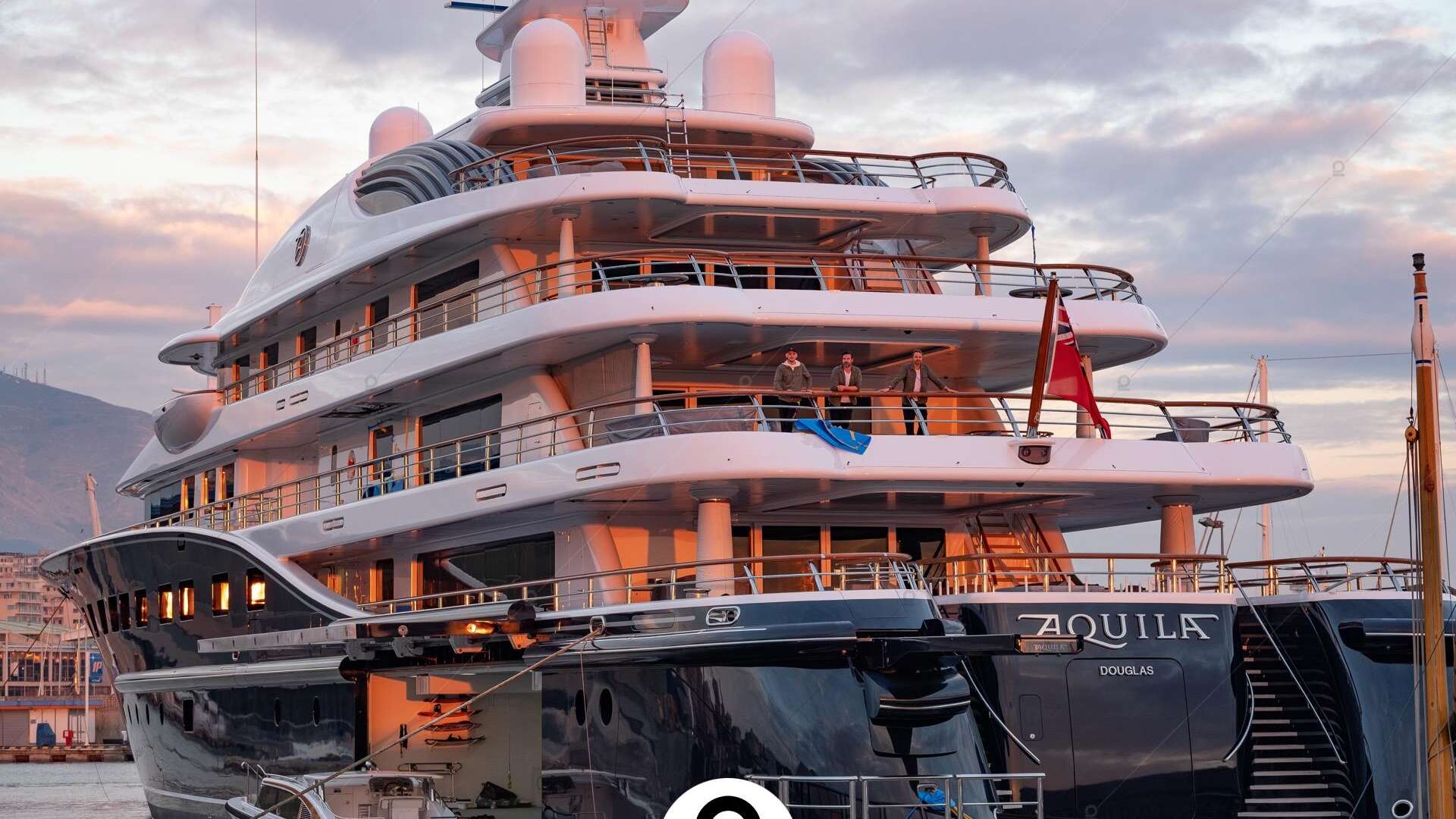
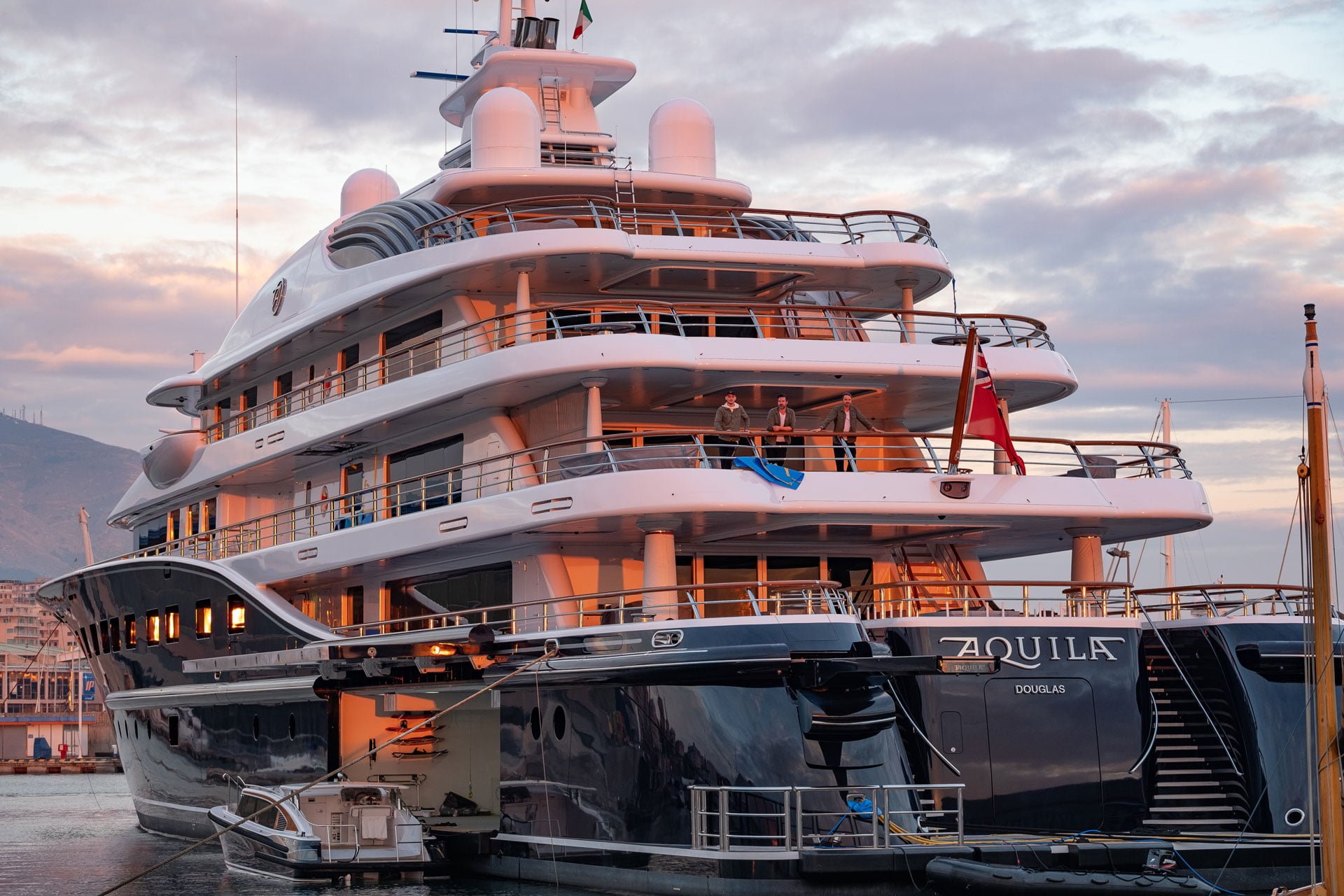
Our largest marine job makes the point. On Aquila, an 85.6 m motor yacht we worked on in Genoa, the work was railings, the furniture throughout the vessel and extensive interior and exterior surfaces rather than a hull livery, with a Belgian crew working alongside our California team for about two weeks full time and the last finishing done after she sailed to Marina del Rey. Every one of those surfaces was handled the same way a graphic has to be handled: find the edge the film can wrap behind, and build the layout around it.
What about the waterline?
Nothing below it. Cast vinyl is not an antifouling system and permanent immersion lifts any pressure sensitive adhesive eventually. We stop the design at the waterline or a defined boot stripe above it, and that line becomes part of the composition rather than an apology. Anything under the water is paint, and we say so before quoting.
Frequently asked questions
Can any boat be wrapped?
Most fiberglass and gelcoat hulls above the waterline, yes. Chalked, heavily oxidized or previously repaired gelcoat needs correction first, because film follows the surface it is given. Aluminum and steel above the waterline are fine. Canvas, raw teak and anything flexing under load are not.
How long do boat wrap designs last?
Five to seven years on vertical surfaces in Belgian conditions and three to five under constant California sun and salt, with the horizontal surfaces always first to go. Printed graphics with a laminate hold color longer than unlaminated print.
Is a wrap cheaper than a repaint?
Usually, and it is reversible, which a repaint is not. The numbers move a long way with size and hull condition, so we keep them as ranges in our breakdown of what a boat wrap costs.
Can we match an existing design or livery?
Yes, including fleet or charter branding that already exists on paper. We print in house, so a color is matched against a proof on the actual film rather than against a screen.
Can the interior be done at the same time?
Often it makes sense to, since the crew and the lift are already there. Our boat interior wrapping work covers panels, furniture and surfaces with the same films used on the Aquila.
If you have a design in mind, or a boat and no design yet, we draw the layout on the actual hull shape before anything is printed. Start a conversation through our nautical services page. Films we use for marine work come from 3M among others.