






Colored paint protection film does two jobs at once: it changes the color of the car and protects the factory paint underneath. It is a pigmented thermoplastic polyurethane (TPU) film, thicker than vinyl, with a self-healing topcoat, and it comes off again without altering the paint below. That combination is why owners of collectible and exotic cars increasingly choose it over both a respray and a standard wrap.
What is colored paint protection film?
Colored PPF is a TPU membrane with pigment or a finish built into the film rather than sprayed onto the car. The protective stack is three layers: the TPU itself, a pressure-sensitive adhesive designed to release cleanly, and a cured topcoat. The TPU absorbs and spreads impact energy, so stone chips stop at the film. The topcoat is hydrophobic and chemically resistant, and it has a degree of self-healing: fine swirl marks close up as the polymer relaxes, faster with warmth.
Because the color lives in the film, the change is reversible. Factory paint in sound condition comes out unchanged on removal, which matters when a car has provenance to protect. See our colored PPF service for the finishes we carry.
How does colored PPF differ from a vinyl wrap?
Both change how a car looks. They are built for different priorities. Vinyl is thinner, more printable and better suited to graphics, logos and one-off designs. Colored PPF is thicker, self-healing and built to take abuse. If the goal is a design or a livery, vinyl is the right tool. If the goal is to keep the paint perfect while changing the color, PPF is.
| Attribute | Colored PPF (TPU) | Vinyl wrap (cast PVC) |
|---|---|---|
| Material | Thermoplastic polyurethane | Cast PVC |
| Typical thickness | Roughly 6 to 8 mil | Roughly 2 to 4 mil |
| Self-healing topcoat | Yes | No |
| Best for | Color change plus chip protection | Printed designs, liveries, fleet graphics |
| Cost | Higher, both material and labor | Lower |
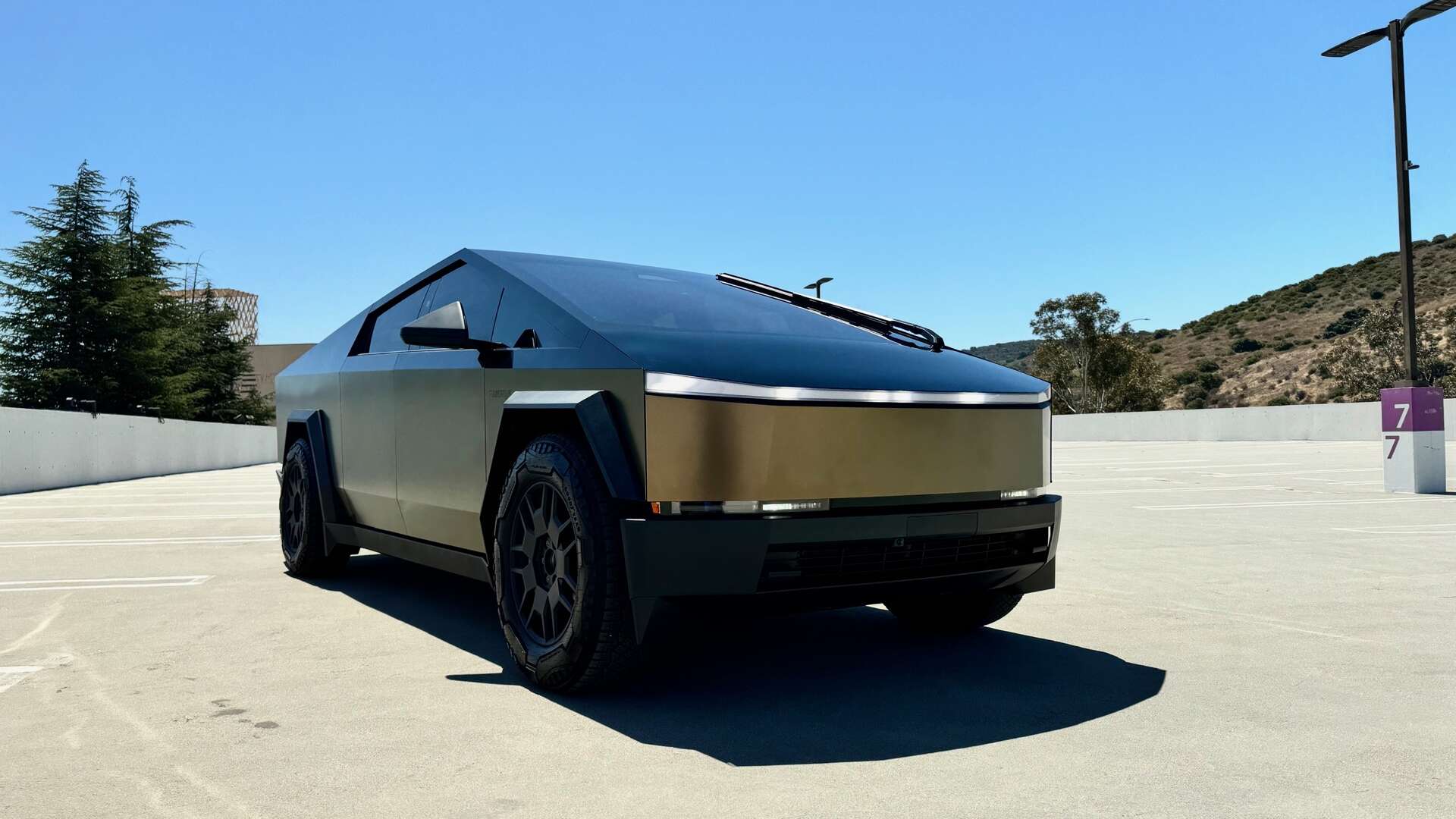
The two are not mutually exclusive. On a Tesla Cybertruck we built at our Westlake Village studio for a client in Thousand Oaks, the lower body is Techwrap Bond Gold vinyl and the upper section is Super Gloss Black PPF by UPPF, split along the body lines the Cybertruck already has. Color where color was wanted, film where the impacts land. Our guide on vinyl wrap versus paint protection film goes into the trade-off in more depth.
Which colored PPF finishes are available?
Gloss, matte, satin, metallic and color-shift. The differences are optical and practical in equal measure.
- Gloss gives the deepest color saturation and the most reflection. It also shows swirl marks most clearly, which is where the self-healing topcoat earns its keep.
- Matte scatters light and hides small surface irregularities, but it needs matte-safe products. Never polish it.
- Satin is the middle ground: a soft luster that keeps body lines readable and is easier to live with than matte.
- Metallic carries reflective particles that give depth under directional light, particularly on sculpted panels.
- Color-shift uses layered interference pigments so the hue changes with viewing angle. High impact, and the hardest to repair invisibly if a panel is damaged.
Finish choice should follow the shape of the car, not just the color card. On a Cybertruck the flat panels carry matte and satin well – our Avery Matte Khaki Green Cybertruck for a client in Calabasas is a good example. On a curved supercar body, gloss and metallic usually hold more of the original design.
Which brands and materials matter?
Material quality decides whether a film yellows, and installer skill decides whether it lifts. At 2wrap.com, Inozetek is our primary PPF brand, and we are an exclusive and APEX dealer for it – a decision we made only after testing it against the alternatives. We also work with XPEL, STEK, 3M and UPPF depending on the finish and the vehicle. What to look for is consistent: a non-yellowing TPU, a documented self-healing topcoat, the finish you actually want, and an installer who works on cars like yours every week.
Warranty terms differ per manufacturer and per finish. Ask for the specific warranty document for the film going on your car rather than relying on a headline number.
What does installation involve, and what does it cost?
Preparation decides the result. The car is washed, decontaminated and inspected, and paint defects are corrected first, because film magnifies whatever is underneath it rather than hiding it. Patterns are plotter-cut or made on the vehicle, then the film is applied with slip solution, squeegee and heat, wrapped around edges rather than trimmed short. Door jambs, mirrors and complex intakes take the most time and are where the difference between installers becomes visible.
Cost follows coverage, film grade, finish and vehicle complexity. A front-end package covering hood, fenders, mirrors and bumper is a fraction of a full-vehicle install. Specialty metallic and color-shift films carry a material premium. Full colored PPF on an exotic sits well above a straight vinyl color change. Those are orientation points rather than a price list: the only accurate figure comes from looking at your car.
Frequently asked questions about colored paint protection film
Does colored PPF damage the original paint?
No, when a quality film is professionally removed from factory paint in sound condition. Problems occur with aftermarket respray work, poorly adhered paint or film left far beyond its service life.
Is colored PPF better than a vinyl wrap?
Better at protection, yes. Not better at everything. For printed designs, liveries and fleet graphics a vinyl wrap remains the right choice, and it costs less.
Can colored PPF be applied over an existing wrap?
No. Film goes on clean, prepared paint. An existing wrap comes off first, and the paint underneath is inspected before anything new goes on.
How is colored PPF maintained?
Hand wash with a pH-neutral shampoo, dry with clean microfiber, and stay out of automatic brush washes. Use matte-safe products on matte and satin finishes. Remove fuel spills, bird droppings and tree sap the same day.
Can I see the color on my own car first?
Yes. We use the Instant Color Changer to show your vehicle in the film you are considering before anything is ordered – click it before you stick it. Request a quote for your project and we will walk through finishes and coverage with you.
This article is part of the 2wrap.com knowledge base on paint protection film. We design, print and install in-house at our studios in Westlake Village, California and Weelde, Belgium. Related work: Bond Gold Cybertruck, Khaki Green Cybertruck.