







How long does a car wrap last? On cast film, professionally installed, five to seven years of good appearance is realistic. But that single number hides the useful truth: a wrap does not age evenly. The roof and hood reach the end of their life years before the doors do, and a car that lives in Californian sun ages differently from one that spends its winters on salted Belgian roads.
We install and remove wraps at our studios in Westlake Village, California and Weelde, Belgium, which means we see the same films in two very different climates. Here is what actually determines the answer.
How long does a car wrap last per panel?
Ultraviolet light does most of the damage, and it does not arrive evenly. Horizontal surfaces take several times the exposure of vertical ones.
- Roof, hood and trunk lid: typically the first to go, often at three to five years in strong sun.
- Doors and quarter panels: five to seven years, sometimes longer on a garaged car.
- Bumpers and lower panels: limited by stone chips and road grime rather than by sun.
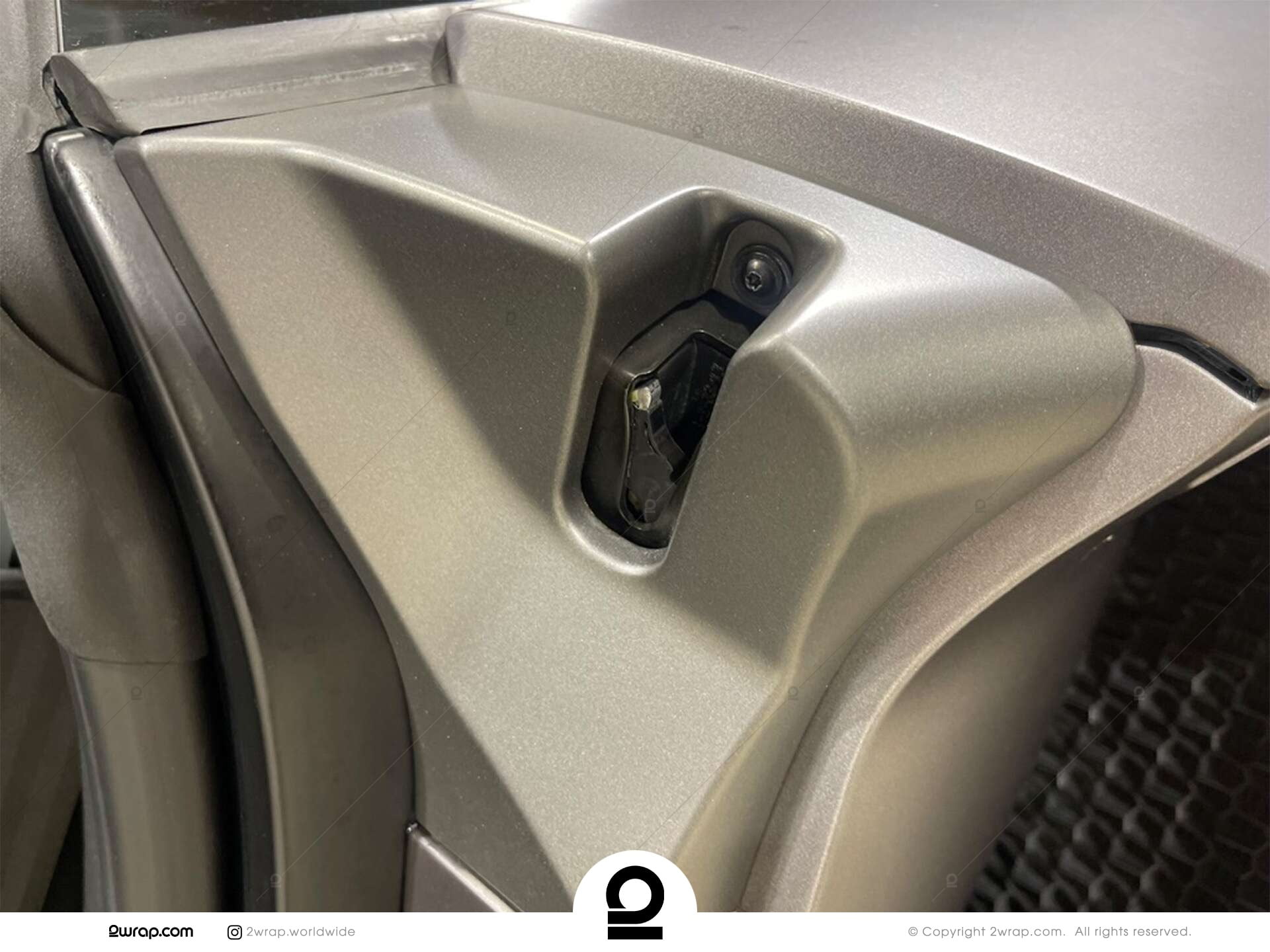
- Edges and seams: the real weak point. Where film was not tucked behind a removed part, lifting starts here first.
This is why a five-year-old wrap can look perfect from the side and tired from above. Replacing only the horizontal panels is a legitimate option and one we quote regularly.
What makes the difference between three years and seven?
Cast film or calendered film. Cast film is dimensionally stable, conforms to curves and releases cleanly at the end of its life. Calendered film shrinks back from edges and goes brittle. It is the single biggest factor.
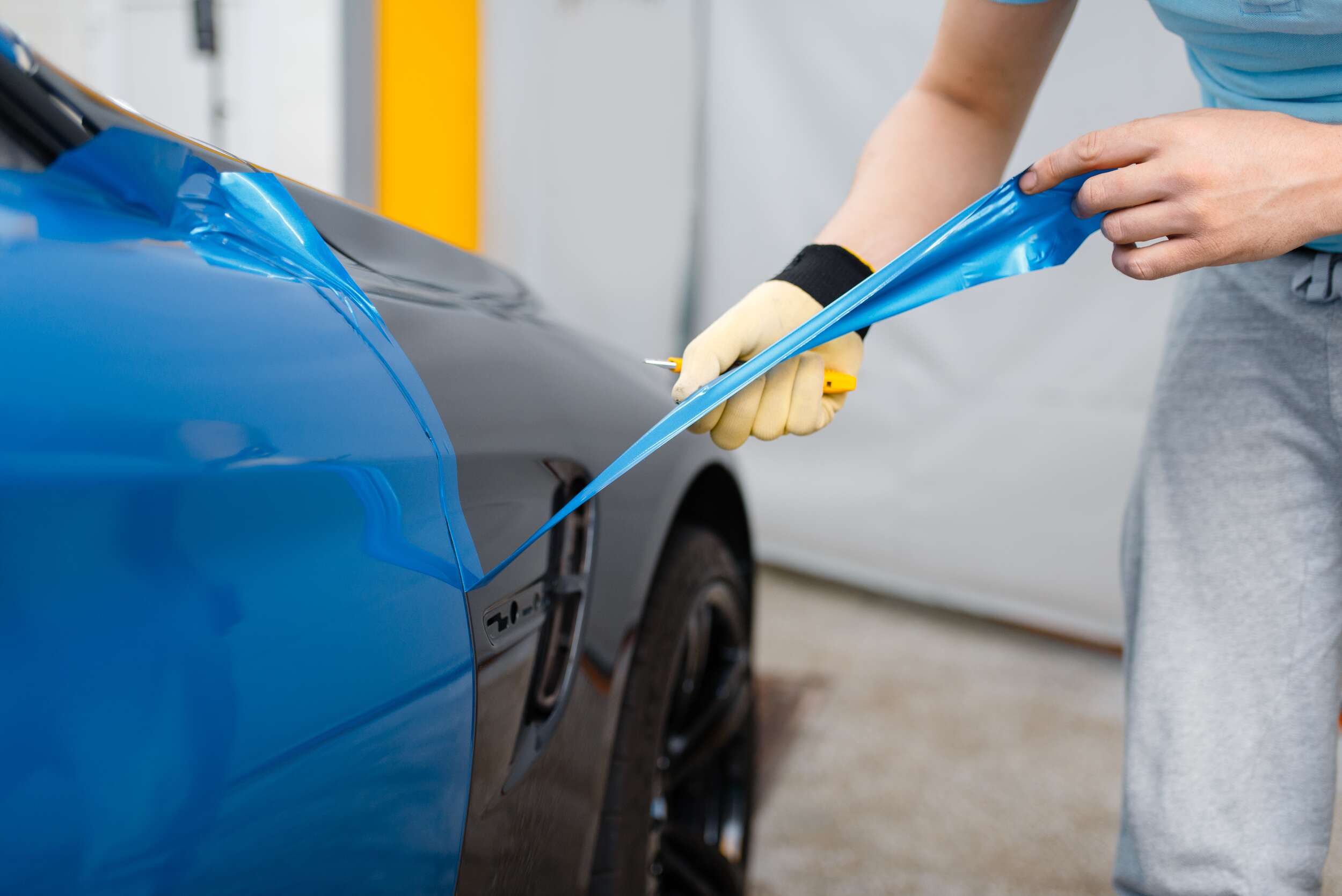
The install. Film tucked behind removed bumpers, handles and lights is not sitting in the airflow, so it does not lift. Film cut at a panel edge and post-heated properly stays put. Shortcuts at this stage show up in year two, not year six.
Color and finish. Reds and bright oranges hold pigment less well than blacks, greys and whites. A Lamborghini Aventador in a saturated red will show sun change before the same car in 3M Matt Dark Grey would. Matte and satin finishes also mark more easily in daily use, which is a separate question from durability.
Where the car sleeps. A garaged car in Westlake Village will outlast one parked outside on the same street by years. In Belgium the enemy is different: road salt and repeated freeze-thaw cycles working at the edges and the lower panels.
How it is washed. A high-pressure lance aimed at a seam will lift film that would otherwise have lasted for years. Automatic brush washes abrade matte finishes. Hand washing is not a nicety here.
What are the signs it is time to replace a wrap?
Lifting or curling at edges and seams, a visible color difference between horizontal and vertical panels, a chalky look on a gloss finish, and cracking when you press a fingernail into the film. Cracking in particular means act now: film that has gone brittle takes far more labor to remove.
That last point is worth stating plainly. We once spent more than sixty hours removing calendered film from a pickup that had been left on years past its life. The removal cost more than the original wrap. A wrap taken off inside its service life comes away in sheets in under a day.
Does removal damage the paint underneath?
On sound factory paint, no. The film comes off and the paint is still there, which is the whole point of a removable layer. We covered what removal really leaves behind in does a car wrap damage paint. Problems come from cheap film, from film left on too long, or from paint that was already failing before the wrap went on.
Frequently asked questions
Can a wrap be extended beyond its normal life?
Yes, within reason. Garage or cover the car, hand wash it, keep aggressive solvents away from the film, and replace horizontal panels when they go rather than waiting for the whole car. A ceramic coating over gloss film helps with cleaning; it does not stop ultraviolet ageing.
Does a wrap last as long as paint?
No, and it is not meant to. Factory paint with a sound clearcoat lasts the life of the car. A wrap is a removable finish with a service life, which is exactly what makes it reversible. We compare the two in car wrap vs paint.
How often can you re-wrap the same car?
As often as you like, provided each wrap is removed properly and the paint underneath stays sound. Several of our clients change color every few years. There is no benefit in replacing a healthy wrap early.
Do partial wraps last as long as full wraps?
The film behaves the same, but partial wraps have more exposed edges, so edge care matters more. A roof wrap in particular takes the harshest exposure on the car.
Is a wrap’s lifespan covered by a warranty?
Two warranties apply: the film manufacturer covers the material, and the installer covers the workmanship. What each one actually covers is set out in our guide to the car wrap warranty.
If you want an honest read on a wrap you already have, send us photographs of the roof and the edges and we will tell you whether it has years left or months. See our automotive services.