






Does car wrap damage paint? Not on sound factory paint, and not when the film is installed and removed properly. The film sits on the clear coat, the adhesive is designed to release with controlled heat, and the paint underneath comes back the color it left the factory. Damage happens in three specific situations: the paint was already failing, the panel had been resprayed, or the film was left on years past its life.
Does a car wrap damage the paint underneath?
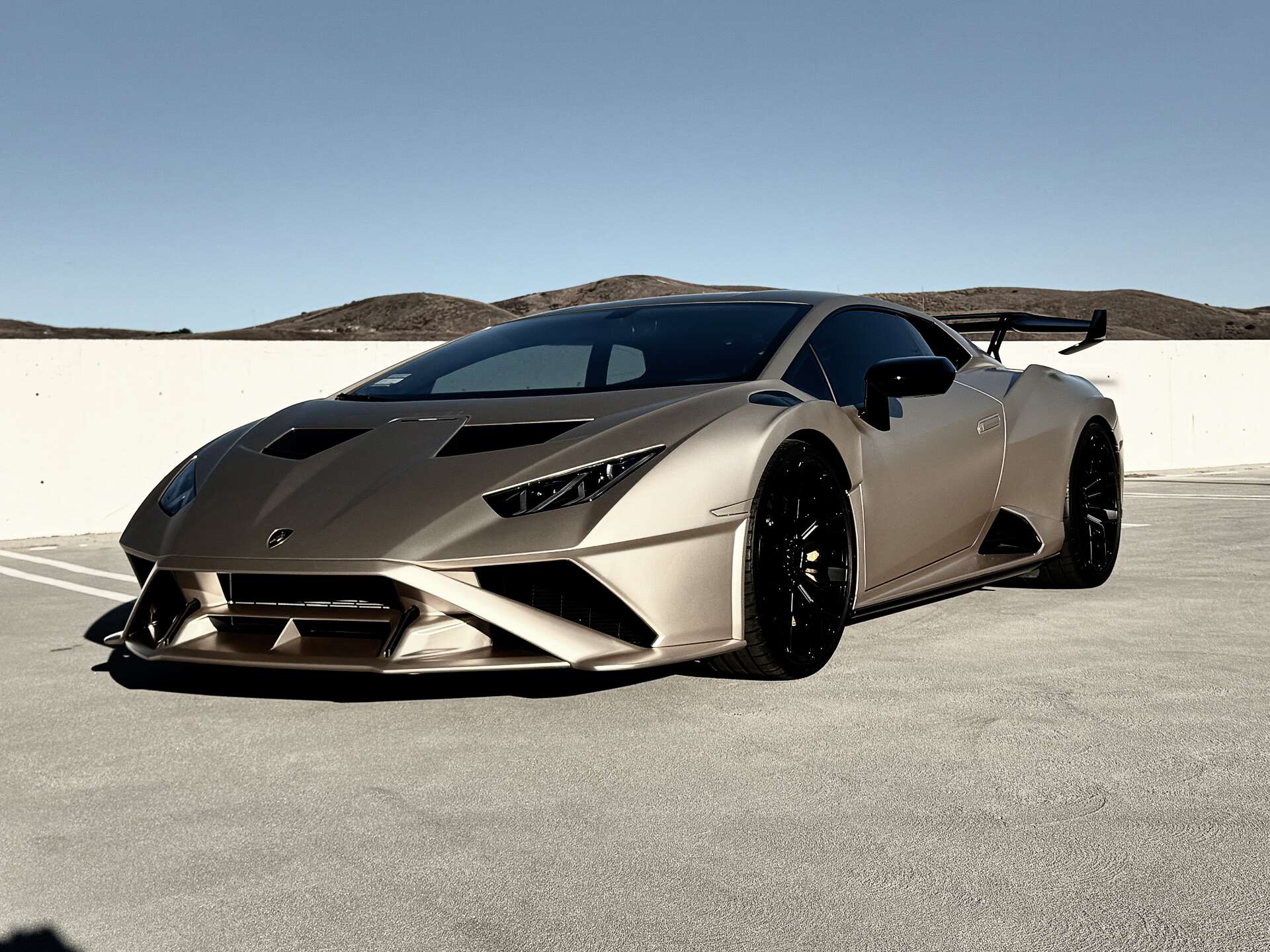
No, and in most cases it does the opposite. The film takes the stone chips, the bird droppings and the UV that would otherwise land on the clear coat. On the Lamborghini Huracan STO we took from blue to gold in Oracal Champagne Metallic at our Westlake Village studio, the factory blue is still there, untouched under the film, including in the door jambs where we ran the material through. That is the point of a color change: it is a decision you can reverse.
What a wrap does not do is stop a dent or heal a scratch. Cast film is roughly the thickness of a sheet of paper. For impact protection you want paint protection film, a thicker urethane layer with a different job, and often the two are combined on the same car.
Does removing a car wrap damage paint?
Removal is where the difference between a good install and a cheap one becomes visible. Quality cast film comes off in long strips with controlled heat and leaves a surface that needs nothing more than adhesive remover and a wash.
Cheap calendered film hardens on the car, tears into small pieces and leaves adhesive across every panel. We have had a pickup in the shop where the removal alone ran past sixty hours, every one of them caused by the film someone else had chosen. Nothing was wrong with the paint. The film simply refused to let go in one piece.
When does car wrap damage paint for real?
Three cases, and a good shop tells you about them before you pay. Paint that is already failing, so flaking clear coat or bubbling primer, will come away with the film: the wrap did not cause that, it revealed it. Repainted panels are the real risk, because an aftermarket respray rarely bonds like factory paint and film pulls harder than a weak respray can take. And a wrap left on far beyond its life goes brittle, which turns an hour of removal into a day.
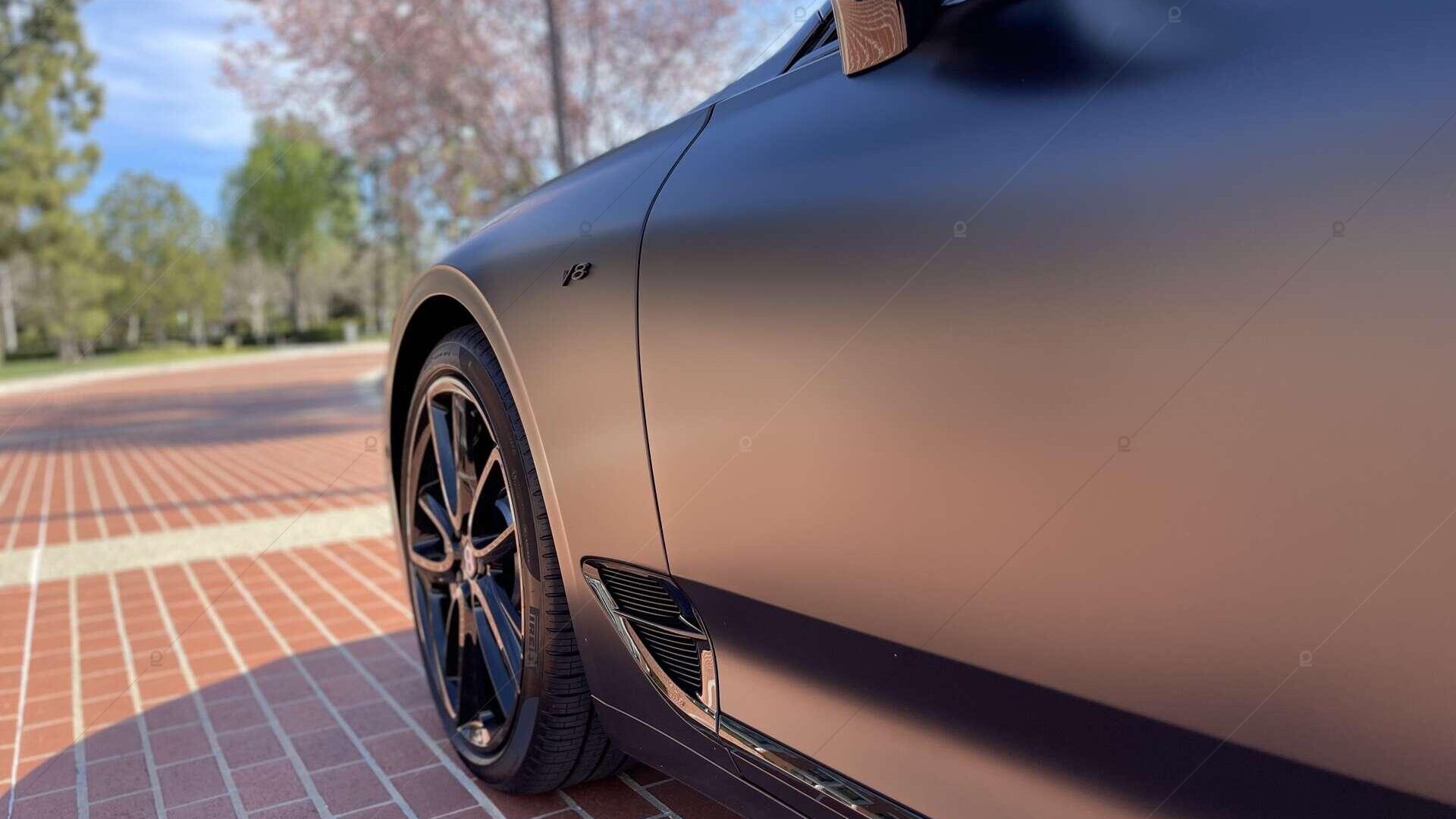
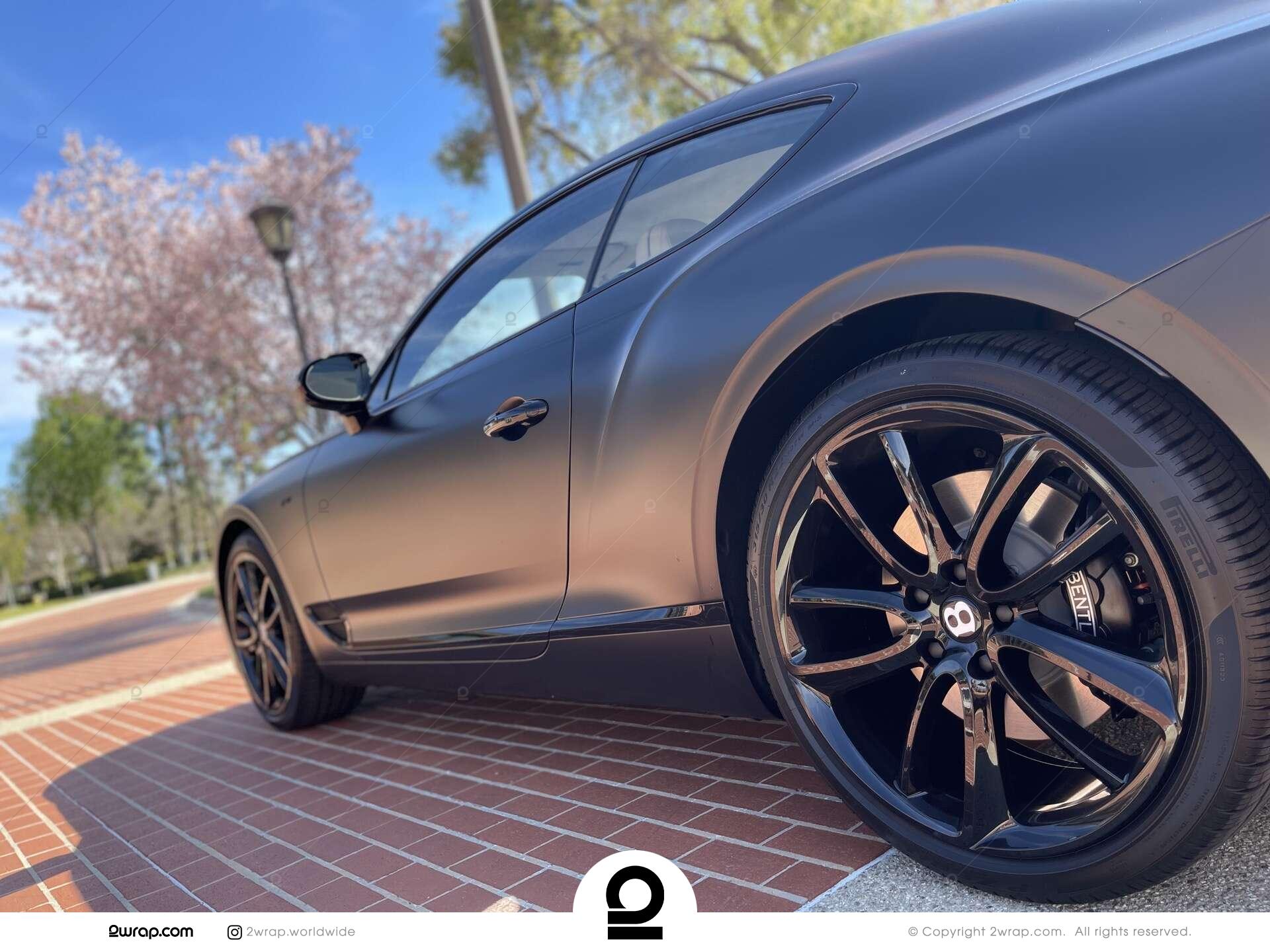
On the Bentley Continental GT V8 we wrapped in 3M satin black the panels were sound factory paint, which is exactly why a full color change was the right call on a car like that. If the panels are not sound, we say so before quoting.
Is wrapping more sustainable than repainting?
Partly, and it is worth being precise instead of green. Cast wrap film is PVC based. It is not recycled in any ordinary waste stream, and no honest shop will tell you the film itself is an environmental product.
What is defensible is the rest of the sum. A wrap avoids a full respray with its solvents and booth energy. It keeps the original paint intact, so the car can be returned to standard rather than refinished again. And it extends the life of panels that would otherwise be repainted or replaced. A color you can change back is one repaint that never happens, and that argument stands on its own without dressing it up.
Frequently asked questions
Does car wrap damage paint on a leased car?
No, and that is usually the reason to wrap one. A lease normally has to come back in the original color, and a wrap over sound factory paint comes off without trace, which a respray never does. Have it removed by the shop that installed it, and keep the invoice with the lease file.
Does a wrap protect the paint or just cover it?
Both, within limits. It shields the clear coat from UV, light abrasion and contamination for as long as the film is in good condition. It will not stop a stone from denting the panel underneath, and it does not repair damage that is already there.
Can you wrap a car that already has paint damage?
Sometimes. Small chips and properly sanded repairs are usually fine. Flaking clear coat, rust or a soft respray is not, because the film will either lift or take the paint with it on removal. We check the panels before quoting, at both studios, and we would rather lose the job than hand back a car in worse condition.
How long can a wrap stay on before removal gets difficult?
Judge it by condition, not by the calendar. Film that is still flexible comes off easily; film that has gone hard and chalky on a sun-facing surface does not. Strong California sun ages a roof and hood faster than the same film on a car in Belgium, so the horizontal panels set the timing, not the doors.
Is vinyl wrap film recyclable?
Not in practice. Removed film is mixed material, printed PVC plus adhesive, and it goes to general waste in most places. Anyone marketing wrap film as recyclable is stretching the point. The honest case for a wrap is reversibility and a respray avoided.
Still asking yourself: does car wrap damage paint on a car like mine? We check the panels before we quote, and we use the Instant Color Changer to show you the car in the actual film color before anything is cut. Click it before you stick it, then ask us for a quote.