








The truck wrap ideas that work all answer one question: what does this vehicle have to say in the three seconds someone sees it in traffic? The designs that earn their keep carry one message, one recognizable shape, and a domain or phone number large enough to read from two lanes away. The ones that fail try to say everything at once.
We design, print and install commercial graphics in-house at our studios in Westlake Village, California and Weelde, Belgium. What follows is not mood board theory. It is what survives contact with a real truck body, real door seams and real road grime.
What makes a truck wrap design work in traffic?
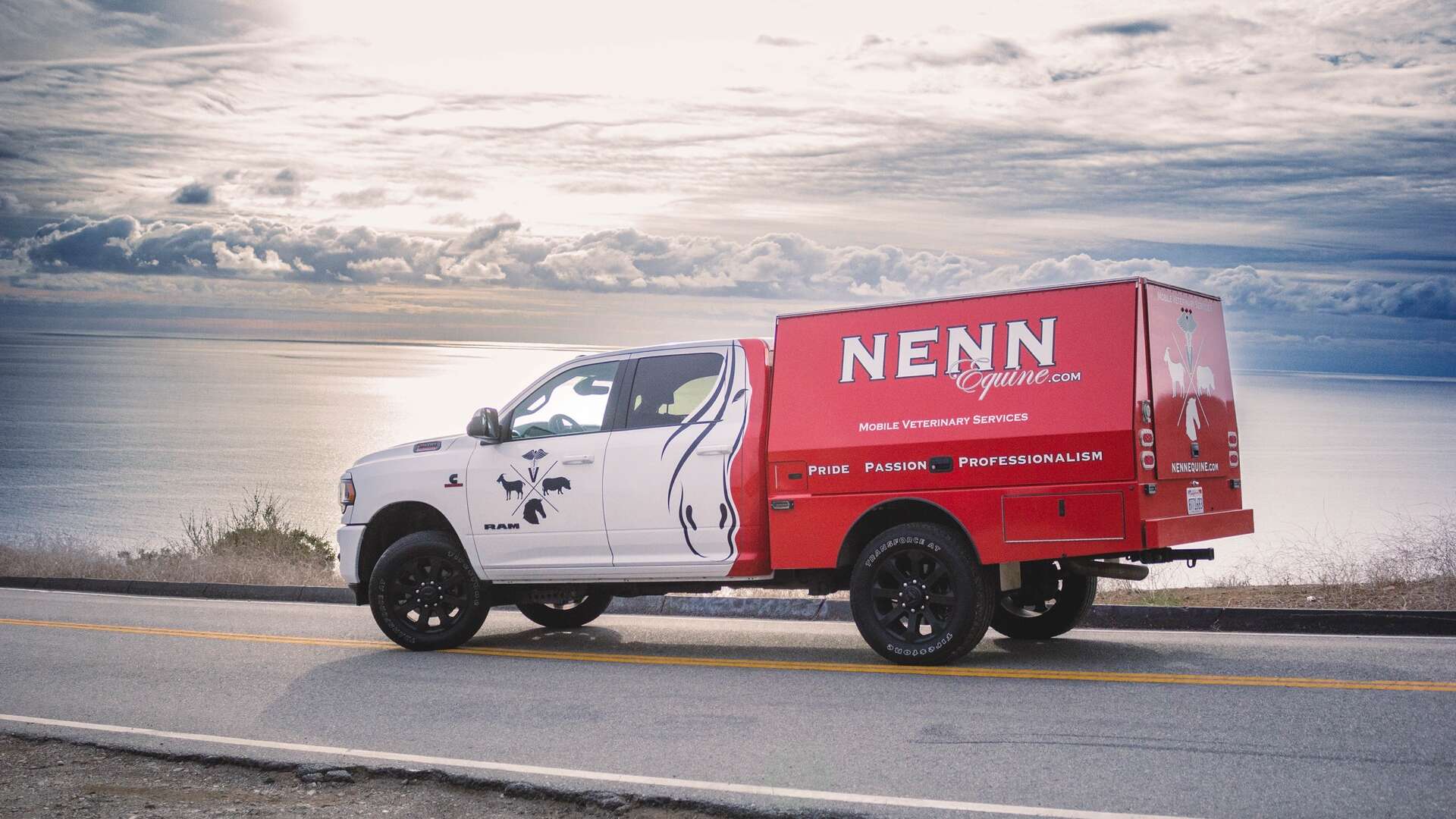
Contrast, not color count. One strong background with a single contrasting element reads further than four colors competing for the same panel. Our Dodge RAM for Nenn Equine Veterinarians runs 3M Gloss Hotrod Red across the full body with clean typography, and it is legible from behind at highway speed precisely because nothing else on the panel competes with it.
The second rule is panel discipline. Trucks have handles, mirrors, fuel doors and deep body lines. Type laid across a seam looks broken on the road no matter how good the file looked on screen. We lay out around the hard points of the specific vehicle instead of stretching a flat template over a generic silhouette.
Seven truck wrap ideas worth considering
1. Full color change with minimal type. One saturated body color, one clean logo, nothing else. It reads as a brand rather than an advertisement, and it ages well.
2. The dark cab, bright box. Keep the cab in a deep neutral and put the message on the cargo area, where the flat surface gives you the most uninterrupted space.
3. Rear-door priority. In stop-and-go traffic the tailgate or rear doors are the panel people actually study. Put the offer and the web address there, not on the hood.
4. Silhouette graphics. A single large shape tied to the trade, cut from the body color, communicates faster than a photograph. Trades with a recognizable tool or animal have an advantage here.
5. Partial wrap with a hard edge. A deliberate diagonal or vertical break between factory paint and printed film looks intentional. A soft fade over a light factory color rarely does.
6. Fleet system, not fleet copies. Design a rule set (color positions, type sizes, logo placement) that scales from a van to a box truck, so vehicles of different sizes still look like one fleet.
7. Reflective accents on the lower third. For service vehicles parked roadside, reflective film on the lower panels does real work after dark and adds nothing visually during the day.
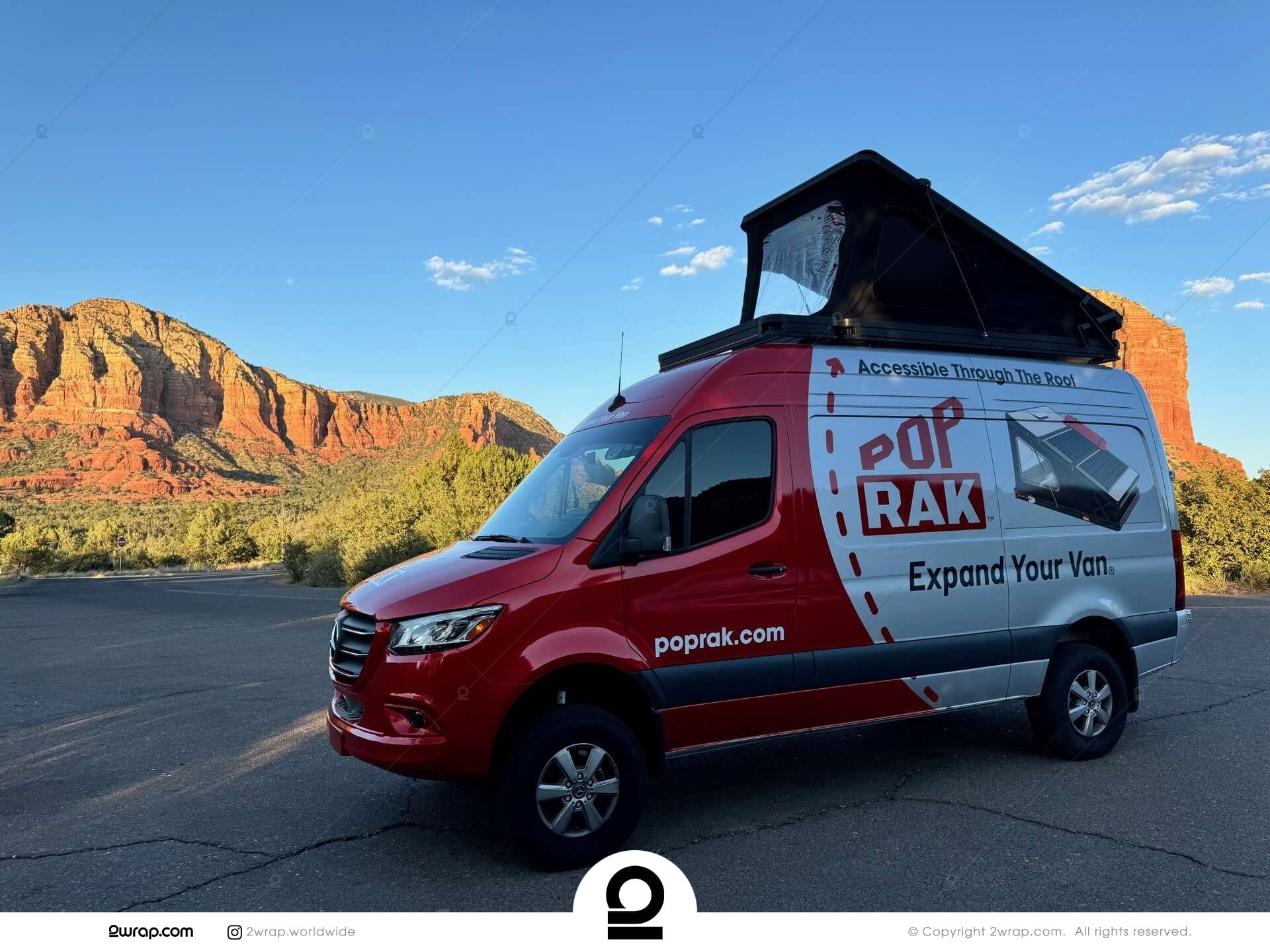
The PopRak Sprinter is a working example of the fleet system approach: a layout that holds together whether it sits on one van or fifteen.
Should you wrap the whole truck or part of it?
Full coverage is the right call when the factory color fights the brand, or when the vehicle is the primary advertising channel. Partial coverage makes sense on a white or black truck where the existing paint can carry part of the design honestly.
What we steer clients away from is partial coverage chosen only to save money on a color that does not work. A half-wrapped truck in a color the brand does not own looks like a compromise, because it is one. Better to spend the same budget on a smaller, fully resolved design.
What do these designs cost to put on the road?
Design, print and install move together, and the vehicle shape drives most of the number. We publish honest ranges by vehicle type in our guide to what a truck wrap costs, including where the money actually goes. For multi-vehicle work, per-unit cost drops once the design is settled, because the layout is solved once and repeated.
Film choice matters more than most quotes admit. Cast films from manufacturers such as 3M conform to curves and rivets and come off cleanly years later. Calendered film is cheaper per square foot and costs far more in labor when it is time to remove it.
Frequently asked questions
How long does a truck wrap last?
On a cast film with a professional install, five to seven years of good appearance is realistic, with horizontal panels fading first. California sun is harder on a roof and hood than a Belgian winter is; road salt is harder on the lower panels.
Can you wrap a fleet without taking it off the road?
Yes. We wrapped twenty vehicles for Intuit TurboTax in four days entirely on site across Los Angeles, as part of an eighty-vehicle national rollout. On-site work keeps vehicles in service and needs a controlled space and a tight schedule.
Do partial truck wraps look cheap?
Not when the break between film and paint is a deliberate design decision. They look cheap when the edge is arbitrary or when the printed color nearly matches the factory paint but misses.
Will a wrap damage the truck’s paint?
On sound factory paint, no. The film covers the paint and comes off again. Damage happens where the paint was already failing, or where cheap film was left on far past its life and has to be scraped.
How do I keep a wrapped work truck looking new?
Hand wash, no high-pressure lance at the seams, and no aggressive solvents. Treat printed graphics the way you would treat fresh paint, and re-check the edges after the first winter.
If you are weighing a design for one truck or a whole fleet, we will put a proper layout in front of you before anything is printed. See our fleet and advertising services.

