








Dust does not damage paint. Grit dragged across paint damages it, and so does a decade of ultraviolet light. That distinction is the whole case for paint protection film Los Angeles owners actually benefit from: film does not keep a car clean, it keeps the clear coat intact underneath, and it does that by taking the hit from canyon gravel, freeway debris and sun instead of your paint.
Paint protection film is a clear polyurethane layer, typically 150 to 200 microns thick, with an adhesive made to release again. It is a physical layer, which is why it stops a stone. A ceramic coating is a chemical layer a few microns thick, which is why it does not.
What Does Paint Protection Film in Los Angeles Actually Stop?
Rock chips, first and most of all. Gravel thrown up on Kanan Dume Road or the 101 arrives with enough energy to break a clear coat, and film absorbs that. Then UV: the film carries a stabilizer package, and the panels under it keep their gloss while uncovered panels dull. Then the chemical attacks that genuinely do etch paint in a dry climate, which are bird droppings and bug residue left to bake rather than smog in general.
What it will not do: it will not stop a careless wash. Windblown dust is harmless sitting on paint and abrasive the moment a dry towel pushes it across. More paint is ruined in driveways than on freeways, and no film changes that.

Which Panels Are Worth Covering?
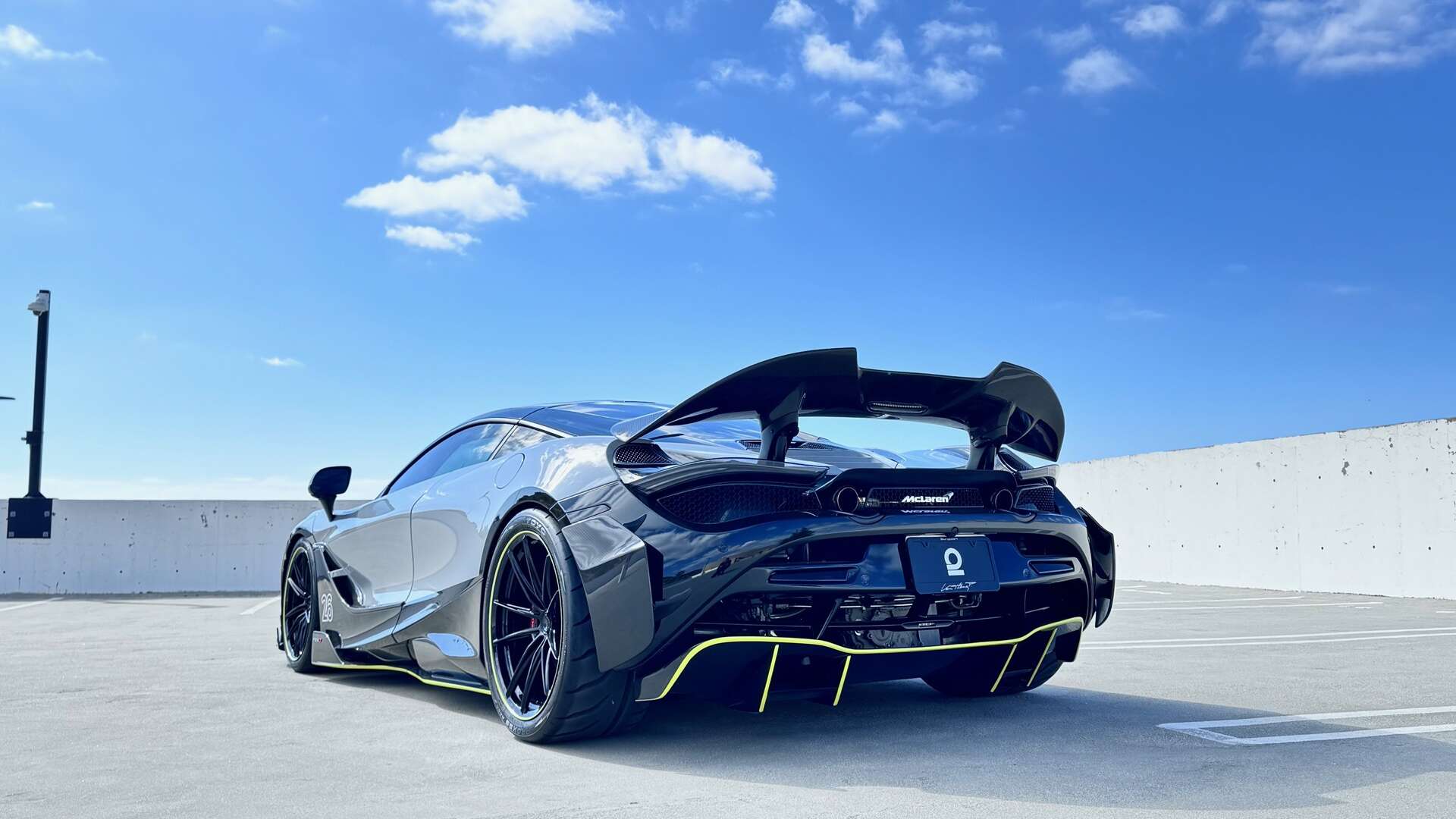
We start where the damage is: the hood, the full front bumper, the mirror caps, the fenders ahead of the door and the leading edge of the roof. On a McLaren 765LT in our Westlake Village studio that is also where disassembly takes the hours, because film is wrapped behind an edge rather than cut along it. A full body in film is the complete answer, and it costs what it costs; the ranges per scope are in paint protection film cost, and they are orientation ranges rather than a price list.
The honest version of the advice: a car that lives outdoors in Southern California sun, or one that commutes through the canyons, earns film on the front end before it earns anything else. A garaged weekend car earns it on the hood and bumper and little more.
How Long Does It Last Here?
Not evenly, which is the part most articles skip. The hood edge and the front bumper reach the end of their life years before the doors do, because they take the impacts and the heat. We set out what we see panel by panel in how long does PPF last. In our Belgian studio the same film fails for a different reason: road salt sitting along edges and seams through winter, which we wrote about in car wrap winter care in Belgium. Same material, two climates, two different first failures.
Film, Coating, or Both?
Both, in that order, and not as a choice. Film goes on the paint; a coating can go over the film to make it easier to wash. Ceramic coating is detailing work and not a service we offer, which is worth saying plainly rather than selling you something adjacent. Where film and a vinyl color change pull in different directions is a separate question, covered in PPF vs vinyl wrap, and for the colored version there is colored paint protection film. On a Bentley Continental GTC in Turnhout we used glossy Inozetek film on the front for a client from Antwerp, and the paint underneath is untouched.
Frequently Asked Questions
Does paint protection film really self heal?
Light marring in the topcoat closes with heat, from the sun or from warm water. A cut that goes through the film does not. Treat self healing as a property of the surface, not as a repair service.
Will film yellow in Los Angeles sun?
Modern premium film does not, and that is the single biggest change over the last fifteen years. Cheap film still does, and it yellows first on the hood where the heat is. This is the place not to save money.
Can film be removed without damaging the paint?
On sound factory paint, yes, with heat and time. Resprayed panels are the risk, because film can lift a poorly bonded respray, and we say so before we start rather than afterwards.
Do I still need to wash the car carefully?
Yes. Rinse before you touch anything, two buckets or a clean mitt per panel, and never a dry towel on a dusty car. That routine protects paint and film equally, and it is more important in a dusty climate than in a wet one.
Is film worth it on a leased car?
Often, for the front end alone. Chips are the common deduction at lease return, and a partial front costs less than the paintwork that replaces it. For reference on film specification, 3M publishes its own automotive film documentation.
If you want an honest read on what your own car needs, send us photographs of the front end and tell us where it lives and how it is driven. You can see the full range of automotive services, and we quote per scope rather than per car.

