





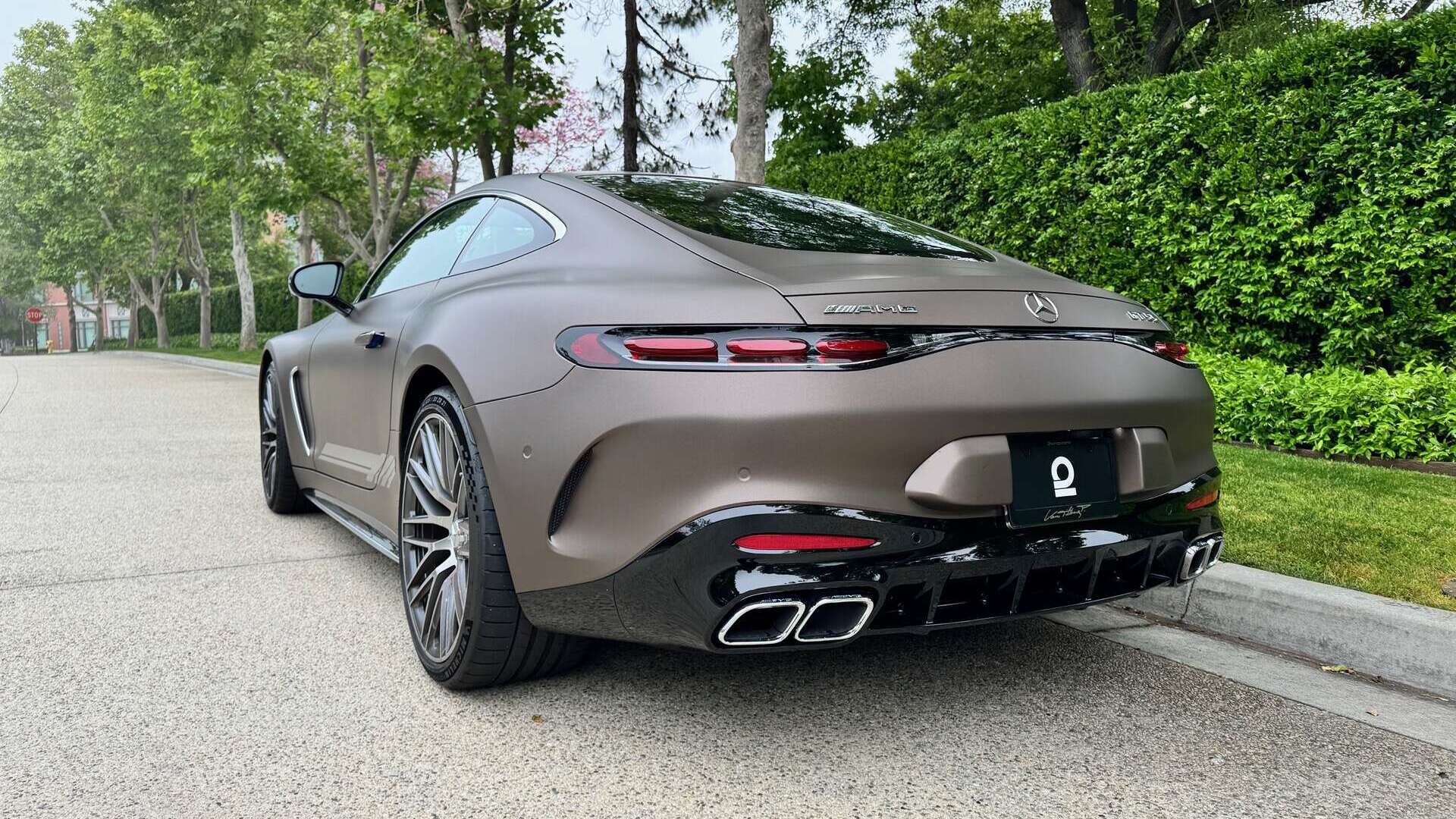
A car wrap is a layer of cast vinyl film applied over the factory paint. It changes the color or carries a printed design, it shields the clear coat from UV and light abrasion, and it releases again with controlled heat so the car can go back to standard. That reversibility is the real difference from paint, and almost everything else worth knowing follows from it.
What does a car wrap actually do for the car?
Two things. It changes how the car looks, in finishes paint cannot easily reach, and it takes the wear that would otherwise land on the clear coat: sun, road film, bird droppings, light scuffs from a car park. What it does not do is stop a dent or absorb a stone strike. Cast film is roughly the thickness of a sheet of paper. If impact protection is the goal, that is paint protection film, a thicker urethane layer, and the two are often combined on the same car.
Because the factory paint stays underneath, a car wrap keeps the original specification intact. That matters on a lease return, and it matters on resale, where a car in its factory color with sound paint is simply easier to sell.
Which types of car wraps are there?
- Full wrap: every visible painted panel, plus the edges and recesses that decide whether it reads as a wrap or as paint. See our guide to a full vehicle wrap for what full coverage should include.
- Partial wrap: roof, hood, mirrors, a set of accents. Often the sharpest result for the money on a car whose base color already works.
- Color change wrap: a solid film in gloss, satin, matte, metallic or color shift. On the Lamborghini Huracan STO we took from blue to gold at Westlake Village, in Oracal Champagne Metallic, the film runs into the interior door jambs. That is where a color change stops looking like a wrap.
- Printed design wrap: a one-off design or livery, designed and printed in house, then installed panel by panel.
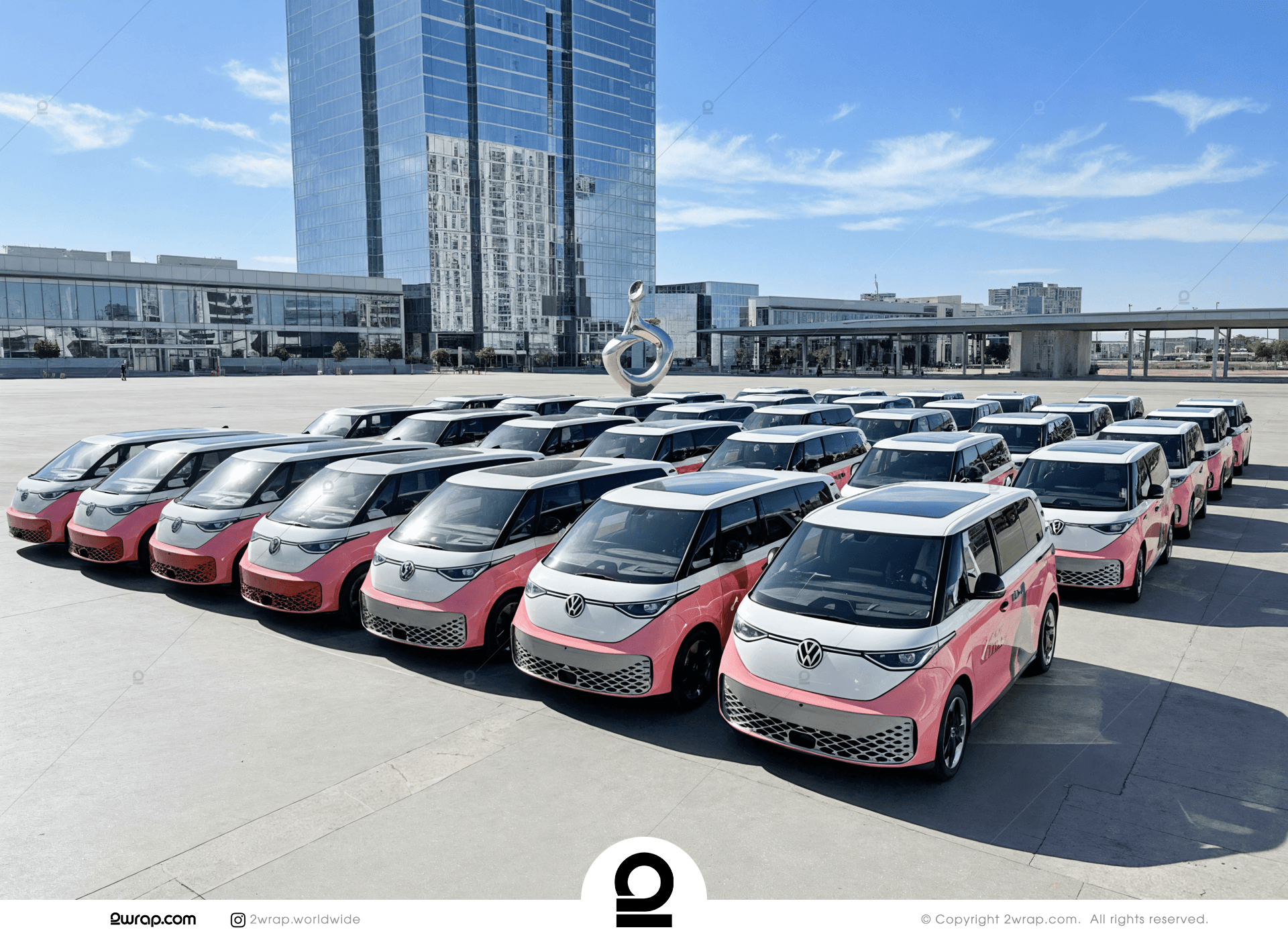
- Commercial and fleet wrap: the same craft with a different brief, where legibility at forty miles an hour matters more than finish.
What do car wraps cost?
Market ranges in the United States for a full color change on a normal passenger car sit roughly between 2,500 and 6,000 dollars. Exotics with carbon parts, deep recesses and one-off printed designs sit above that, and a partial wrap sits well below. Treat those figures as orientation and not as a price list: the panel count, the film, the state of the paint and the amount of disassembly move the number more than the make of the car does. We quote on the actual vehicle.
Which films and finishes do we use?
The material decision is the one that matters most. Cast film is manufactured to lie down over compound curves and to come off again in one piece: 3M, Avery Dennison, Oracal, KPMF, PWF and Inozetek are the lines we work with. Calendered film is made for flat signage. It is cheaper, it shrinks, it hardens on the car and it is the single biggest cause of removals that turn into days of work.
Finishes behave differently under the hand as much as under the eye. Gloss is the most forgiving. Satin sits between gloss and matte. Matte is the least forgiving finish there is, which is why we wrote a separate piece on the matte car wrap. Chrome and color shift films are the most demanding to install and the least tolerant of a stretched panel. And paint protection film is no longer only clear: colored paint protection film changes the color and protects the paint in one layer.
How is a professional car wrap installed?
Preparation decides the result. The car is washed, decontaminated and degreased, then handles, badges, lights and trim come off where they need to. Film is laid with relief cuts rather than brute stretch, edges are wrapped into the panel instead of trimmed at the visible line, and the film is post-heated so it holds its shape in a recess. On the Bentley Continental GT V8 we wrapped in 3M satin black with gloss black accents at Westlake Village, most of the hours went into the parts nobody photographs.
Aftercare is simple and worth following. Hand wash, no automated brushes, no pressure washer close to a seam, and no wax on matte. Design, print and installation all happen in house at our studios in Westlake Village, California and Weelde, Belgium, which is why nobody can point at another supplier when something needs fixing.
What do car wraps do for a fleet?
For a business the sum is different: a wrapped vehicle earns attention on a route it was already driving. Industry estimates for daily impressions run into the tens of thousands per vehicle, though the figure depends entirely on city and route, and we would not build a budget on one number. What is concrete is throughput. For Intuit TurboTax we wrapped twenty vehicles in four days, entirely on site across Los Angeles, as part of an eighty-vehicle national rollout. The full account is in our case study on on-site fleet marketing in Los Angeles, and the service itself sits under fleet marketing.
Frequently asked questions
Do car wraps damage the paint?
Not on sound factory paint, installed and removed properly. Film releases with heat and leaves a surface that needs adhesive remover and a wash. Paint that was already flaking, or an aftermarket respray that never bonded properly, is a different case, and we check the panels before quoting.
How long does a car wrap last?
Judge it by condition rather than by a fixed number. Horizontal panels, so roof and hood, age fastest, and strong California sun is harder on film than a Belgian winter. A garaged gloss wrap and a matte van parked outdoors year round are not comparable, and the film specification on your quote states what the manufacturer stands behind.
Is a wrap cheaper than a respray?
Usually, for a comparable quality level, and it is reversible where paint is not. But a wrap over bad paint is a false economy: film follows the surface it is laid on, so anything wrong underneath is still wrong afterwards.
Can I see the color on my own car first?
Yes. We use the Instant Color Changer to show a client their own vehicle in the actual film color before anything is ordered. Click it before you stick it: it settles more discussions than a swatch book ever did.
Thinking about a color change or a fleet? Ask us for a quote and we will look at the paint, the panels and the film before we talk about anything else.
This article is part of the 2wrap.com knowledge base on car wrapping. We design, print and install in-house at our studios in Westlake Village, California and Weelde, Belgium. Related work: Tesla Model S in matte charcoal grey, Bentley Continental GT V8 in 3M satin black.